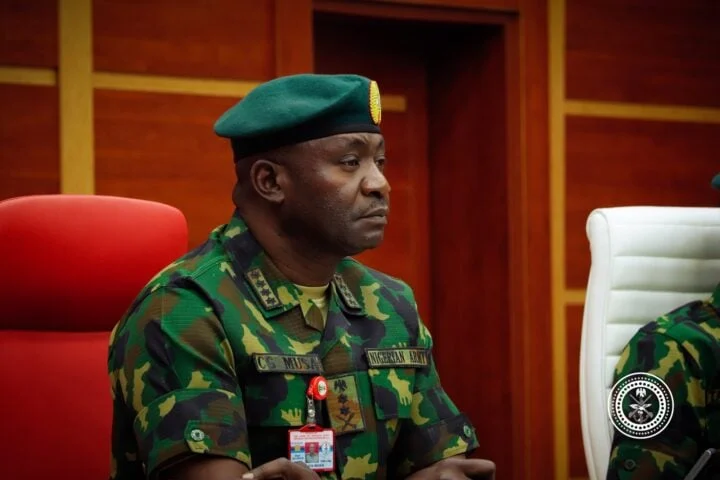
Former Senate Leader, Ali Ndume, on Wednesday urged former Chief of Defence Staff and newly confirmed Minister of Defence, General Christopher Musa (retd.), to push for the inclusion of the Nigerian Army in the First Line Charge to guarantee seamless and timely funding for military operations.
First Line Charge—also known as statutory transfer—is a special funding category in which agencies receive their budgetary allocations directly from the Federation Account before other Ministries, Departments and Agencies.
Those currently on statutory transfer include the Independent National Electoral Commission, the National Assembly, the Universal Basic Education Commission and the Niger Delta Development Commission.
Ndume made the call in a statement issued after the ex-CDS confirmation in Abuja on Wednesday.
Musa, whose nomination by President Bola Tinubu followed the exit of his predecessor, Abubakar Badaru, had earlier appeared before the Senate for screening.
The Red Chamber has since confirmed him as the new Defence Minister.
Ndume argued that placing the armed forces on statutory transfer would eliminate bureaucratic delays that routinely stall the release of funds for the procurement of arms, ammunition and other operational logistics needed to prosecute the war against insurgency.
He said, “While I commend him on his appointment, which most Nigerians have acknowledged that he deserves, he should convince his boss, the President and Commander-in-Chief, on the need to put the Nigerian Army on First Line Charge.
“Aside from adequate funding of the Army, Navy and the Air Force, prompt disbursement of funds is very important.
“He should ensure that the military gets its capital budget in full, because if they don’t get the funds, operations will suffer.”
Ndume stressed that the constitutional duty of the government to protect lives and property must not be compromised.
“Security of lives and property is very important. It is enshrined in the Constitution as the purpose of government to the citizens, and we should stop paying lip service to it.
“There should be no justification for delay in the release of funds for the military for procurement and its other strategic needs,” he added.
He also urged Musa to prioritise the welfare and remuneration of military personnel, many of whom, he said, continue to endure harsh conditions despite their sacrifices.
“My position on better welfare for our Armed Forces is already in the public domain. They are not the best paid in the West African subregion.
“Something must be done, urgently, about this to convince them that we value the sacrifice that they continue to make for the rest of us,” he said.
Ndume’s remarks echo longstanding concerns about the condition of Nigerian soldiers, especially those deployed in the North-East to combat Boko Haram and ISWAP.
For years, troops have complained of delayed salaries, unpaid allowances, poor accommodation, overstretched deployments, inadequate equipment and insufficient protective gear.
Several internal military inquiry reports and testimonies from soldiers’ families have highlighted how frontline troops often rely on outdated weapons, confront operational fatigue and work under intense psychological stress.